Scotland & Malawi: A Legacy of Partnership
Social and cultural links between Scotland and Malawi are extensive and long-standing, stemming from 1859 and the missionary work of David Livingstone. These relationships have evolved from colonial-era missions to a contemporary network of over 1,000 organizations and individuals, involving partnerships in education, culture, health, and shared goals. A formal cooperation agreement was signed by both governments in 2005 then replaced in 2018 by the Global Goals Partnership Agreement that focuses on six key areas for mutual development: health, education, civic governance, sustainable economic development, renewable energy, and water/climate, with the overarching goal of achieving the UN Global Goals in both countries.
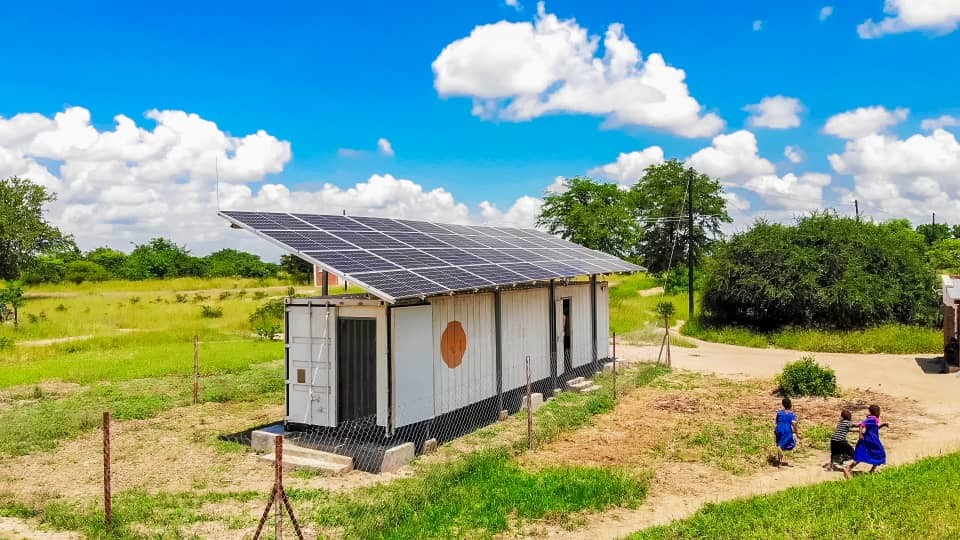
Access to secure, affordable, and reliable energy is crucial for human development and is the focus of global efforts towards SDG7. Rural communities in Malawi consist of some of the poorest and most vulnerable people in the world. They make up around 82% of the country’s population yet only around 5% have electricity access. Viable models for deploying decentralised renewable energy to serve these communities are emerging; however, the sustainability of these models requires innovative finance mechanisms and increased participation of the communities themselves. Scotland has a long history of policy support and grassroots action in community energy ownership and benefit funds, and Community Energy schemes are a prominent feature of both Scottish and Malawian efforts to deploy more renewable energy and effect a low carbon transition.
Supported by seed funding from the Scottish Funding Council, academics from the University of Strathclyde’s Global Renewables Centre and the Institute for Sustainable Communities engaged with colleagues from Mzuzu University in Malawi and the NGO Community Energy Malawi, to explore synergies between the community energy sectors in the two countries.
Over a series of online workshops and in-person meetings, a PESTLE framework was used to explore the differences and similarities across different aspects of the respective community energy sectors (download here). The interlinkages and collaboration opportunities identified are summarised here.
Political
Although set in dramatically different social and economic contexts there are some commonalities to found: both countries have a history of policy support for community energy systems and decentralised renewables; implementation has been enabled through a range of government facilitated grant/subsidy mechanisms; and fluctuations in the political environment and financial support available have created uncertainty and hindered implementation in both countries.
These commonalities create multiple opportunities for research and knowledge exchange:
- Policy makers sharing experiences on renewable energy and community energy policy development (and their interlinkages)
- Refreshing the evidence base for community energy policy support in both contexts – collating international experiences and lessons learnt
- Linking community energy to delivery of national climate, economic and social targets.
Economic
Although operating in very different financial environments, community energy projects in both countries share common challenges: reliance on grants, building viable business models, and dealing with limited revenue streams. Practitioner knowledge exchange initiatives would create a space for sharing these experiences and business model innovations.
Supporting research could include further analysis of community energy financing mechanisms in Scotland – including collaboration within the third / social sector to generate finance – and the relevance/adaptability to the Malawian context. In addition, more detailed comparative analysis of business model innovations could inform practitioners and policy makers in both countries – technology unlocking new revenue streams, and initiatives that stimulate demand and promote entrepreneurship.
Climate Justice/Resilience and climate/green finance provide a potential source of funding for community energy in Malawi via capital grants (from development partners) and carbon credit payments (via Malawi’s new carbon market framework) – analysis of how this echoes the previously available grant and feed-in-tariff (FiT) support that fuelled growth of community energy in Scotland would add to the dialogue on unlocking finance for rural energy projects in Malawi.
Finally, with increasing focus on larger scale renewable energy projects in Malawi, promoting international investment by developers into projects that feed directly to the grid under PPA deals, the concept of community benefit becomes more relevant, creating an opportunity for analysis of translatability of community benefit financial models to the Malawian context.
Social
In both countries, community energy projects are grass-roots, locally-led, efforts, with energy as a means to an end – achieving local socio-economic development priorities. In Malawi this collectivism is a cultural norm and exists across many areas of community development, operating with very limited financial or built capital, and focussing more on social, human, natural, cultural and political capital.
Potential areas for knowledge exchange and research could be:
- Sharing between the Scottish and Malawian sectors on the development and progression of community energy in the two countries – drawing lessons on how community energy may progress in future.
- Sharing experiences of engaging with local stakeholders, residents and beneficiaries, and identifying and mobilising different types of assets/capital could provide valuable insights to practitioners in both countries.
- Exploring different approaches to inclusion of marginalised members of the community.
Technical
In both countries, there is a need for community energy projects to try and understand how available technology and innovations can meet local needs and support business model challenges. The communities rely on external partnerships to access technology and expertise, but this can often be difficult to resource and obtain. In both contexts, identifying (and sometimes co-developing and piloting) technology that productively utilises energy and boosts the community energy business model has been vital to improving the financial viability of projects. Examples in Scotland include community involvement in technology pilot projects around heating or smart grids. In Malawi, examples include introduction of new technology that helps boost agricultural productivity (e.g. milling, cold-storage and irrigation).
International networks and availability of knowledge resources could support this in several areas:
- Sharing experiences of partnership models – exploring opportunities for international partnerships.
- Bi-directional learning on technical innovations arising in different contexts (on-grid vs off-grid, rural vs urban, high-cost vs low-cost).
- Co-exploration of frugal innovation as an approach to designing around appropriate technology.
- Technology transfer & knowledge sharing on smart local energy systems and demand side innovations (Productive Use of Energy).
Environmental
The impact of extreme weather events on communities is relevant to both countries. Community energy systems can be vulnerable to this, but are often considered as providing additional resilience to the energy supply. For example, Malawi has suffered major storm damage to its large-scale hydro powered generation schemes, resulting in national grid blackouts, meanwhile in communities with solar minigrids, the lights were still on.
Potential areas for knowledge exchange and research could be:
- Conversations on the societal impacts of climate change offer an opportunity to build global citizenship thinking and gain deeper insights of climate inequality.
- Knowledge sharing and capacity building on deploying climate-resilient energy infrastructure and successful strategies for climate adaptation, mitigation, and community resilience from various contexts
- Sharing knowledge on disposal of community energy assets and the water-energy-biodiversity nexus.
Legal
Regulatory, licensing and electricity trading arrangements are very different between the countries. However, community energy projects in both settings can face barriers due to ill-fitting regulatory and commercial frameworks.
In Scotland and the rest of the UK, community energy thinking has moved beyond just generation schemes that fed directly into the grid, with the desire to provide locally generated electricity directly to local customers. However, the incumbent UK ‘supplier-hub’ commercial structure[1] remains a significant barrier to implementation.
New initiatives in Malawi to introduce Net Metering could drive a rapid growth in grid connected small-scale renewables, similar to schemes in Scotland under previous FiT arrangements and the current Smart Export Guarantee[2]. With a well-established minigrid regulatory framework and simpler rules around supplier competition, local energy systems featuring local supply and import/export through a grid point of connection seem quite feasible in the near future.
In addition, the laws of association in Scotland and Malawi differ significantly in relation to co-operatives and other social sector organisations, which typically provided the legal structures for community management groups. This creates research and knowledge exchange opportunities in:
- Exploring comparative advantages for integrating community energy systems in different regulatory and commercial environments.
- Knowledge sharing and capacity building on community ownership structures and commercial models.
- An analysis of the laws of association relating to co-operatives and third sector organisations would be helpful in exploring which models work best in different contexts.
[1] https://www.ofgem.gov.uk/blog/do-supplier-hub-market-rules-need-reform
[2] https://www.ofgem.gov.uk/environmental-and-social-schemes/smart-export-guarantee-seg
Next Steps and Call to Action
The journey of exploring synergies between Scotland and Malawi’s community energy sectors has illuminated many fertile pathways for collaboration, learning, and innovation. Below are some suggestions for turning these ideas into action to translate the potential into real-world impact:
- Pilot Twinning Projects: Launch one or more demonstrator “twinning” projects between Scottish and Malawian communities, where partners actively co-design, co-finance, and co-operate energy systems. This would bring the shared learning process into lived experience.
- Joint Funding & Research Calls: Collaborate in putting forward joint funding proposals that explicitly support international community energy exchange, knowledge transfer, and capacity building. Comparative research (e.g. financing models, regulatory frameworks, climate resilience) would tests ideas across contexts.
- Network Building & Knowledge Hubs: Create or strengthen a formal network or hub for Scotland–Malawi community energy exchange — a space for practitioners, academics, communities and policy makers to convene and share tools, case studies and lessons.
Using open platforms or repositories would allow lessons learned to be publicly accessible, resonating with broader movements in the energy modelling community for openness. - Policy Dialogue & Advocacy: Engage with government bodies in both countries to communicate the learnings from such collaborations and to propose enabling policies — for instance, regulatory reforms to enable local supply, licensing, tariffs or community benefit mechanisms. This would encourage adoption of standards of transparency, community participation and accountability in renewable/energy development.
- Capacity Building at the Local Level: Co-develop training programmes, workshops, “exchange residencies” for community energy practitioners (in both directions) so that technical, institutional and social skills are enhanced locally
- Monitoring, Learning & Adaptation: Alongside implementation, build in continuous learning mechanisms, feedback loops, and open documentation of what works and what doesn’t — so that models can be refined and scaled with care. Measure not just outputs (kilowatts, connections) but also social, cultural, resilience and justice outcomes.